TIM-1EARCHIVE TERMINAL // 2026

PROJECT · 项目研发

HoloCubic 开发工具链

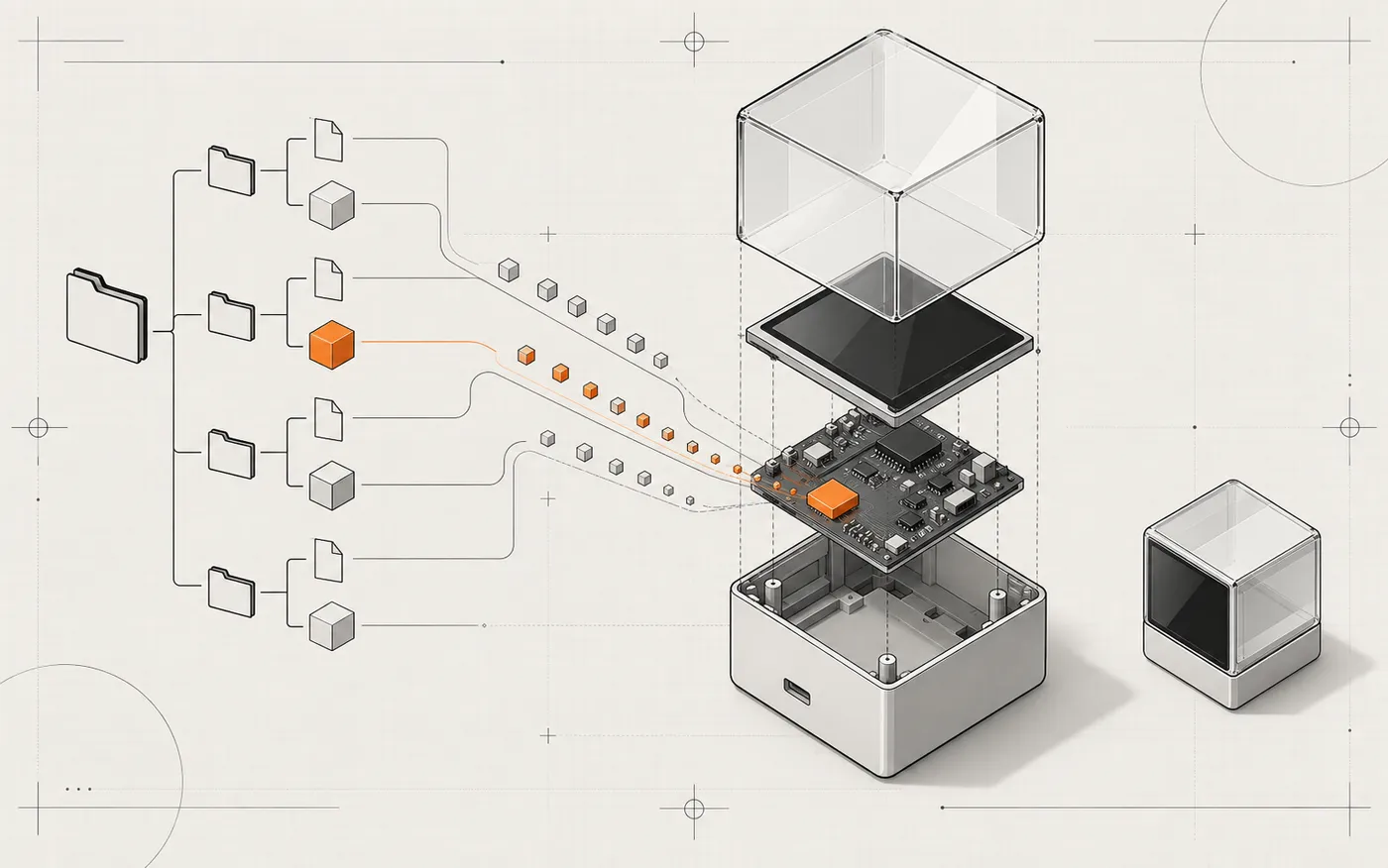
参与上游 DevTools 的目录传输、文件管理与热重载改进,并开发 Node.js、Python、Rust 三种命令行客户端,让设备管理、应用部署与调试可以通过脚本完成。

  • Lua
  • Node.js
  • Python
  • Rust
  • HTTP API
SECTION01

Exhibit

展示

HoloCubic 开发工具链 的效果图
SECTION02

Access Ports

访问入口

SECTION03

Repositories

代码仓库

Tim-1e /

holocubic-cli ↗

Cross-language CLI clients for the HoloCubic DevTools API

STARS
3
FORKS
0
PUSHED
2026.07.15
  • Python35.6%
  • Rust30.5%
  • TypeScript26.2%
  • JavaScript7.6%

HoloCubic CLI 🧊⌨️

English 简体中文

Part of the HoloCubic ecosystem

🧊 Firmware & device 🧩 App ecosystem ⌨️ CLI companion
clocteck/holocubic-nes-esp32 clocteck/holocubic-apps Tim-1e/holocubic-cli
Upstream firmware and DevTools Upstream HoloCubic applications Cross-platform device automation
Official upstream repository Official upstream repository Community companion · you are here ✨

HoloCubic CLI is a community companion project for the two upstream HoloCubic repositories above. It does not replace the firmware or app collection; it makes their DevTools workflow scriptable from Windows, Linux, and macOS.

npm PyPI crates.io License

Node CI Python CI Rust CI Full CLI conformance

HoloCubic CLI provides three stable, cross-platform command-line clients for the HoloCubic DevTools HTTP API. Choose the runtime you already use; all three implementations expose the same device, SD-card, DevRun, and app workflows.

Warning

The current DevTools API has no authentication. Use it only on a trusted local network and never expose the device HTTP service to the public internet.

Stable packages

Node.js Python Rust
Reference · stable Compatible · stable Compatible · stable
Package: @princival/holocubic-cli Package: holocubic-cli-python Crate: holocubic-cli-rust
Command: cubic Command: cubic-py Command: cubic-rs
Node.js 22.12+ Python 3.10+ Rust 1.85+
Implementation details Implementation details Implementation details

All three packages are released as version 0.1.0.

Installation

Install one implementation. You do not need all three.

Node.js / npm

npm install --global @princival/holocubic-cli
cubic --version

Python / PyPI

python -m pip install holocubic-cli-python
cubic-py --version

With uv, the CLI can be installed as an isolated tool:

uv tool install holocubic-cli-python
cubic-py --version

Rust / crates.io

cargo install holocubic-cli-rust --version 0.1.0 --locked
cubic-rs --version

Quick start

The examples use cubic. Substitute cubic-py or cubic-rs when using the Python or Rust package.

cubic device add desk 192.168.3.26
cubic ping
cubic info
cubic ls /sd/apps
cubic push ./my-app /sd/apps/my-app
cubic pull /sd/apps/my-app ./my-app-backup

One-off access does not change saved configuration:

cubic --host 192.168.3.26 --json info

Target resolution order is --host, CUBIC_HOST, then the selected saved device. CUBIC_CONFIG can isolate the configuration file in scripts and CI.

Built for developers and agents

  • Developers can manage SD-card files and apps directly from a terminal, automate repeated deployment steps, and keep device profiles locally.
  • Scripts and CI can select a device explicitly, isolate configuration with CUBIC_CONFIG, consume --json output, and rely on meaningful exit codes.
  • AI agents can install any of the three packages and invoke the CLI as a controlled subprocess instead of reproducing the DevTools HTTP protocol.

A machine-friendly session can begin with read-only discovery:

cubic --host 192.168.3.26 --json ping
cubic --host 192.168.3.26 --json info
cubic --host 192.168.3.26 --json ls /sd/apps

Agents should prefer explicit hosts and JSON output, inspect before mutating, and preserve the CLI's --force, --recursive, and --yes safeguards.

What it can do

Module Capabilities
🔌 Device connection Saved profiles, temporary hosts, ping, capability discovery, and JSON output
💾 SD-card filesystem List, inspect, read, create, rename, delete, and recursive upload/download
🛠️ Developer workflow DevRun read/save/run plus app list/install/remove

All implementations support the same command surface:

device add|list|use|remove
ping
info
ls [remote]
stat <remote>
cat <remote>
mkdir <remote>
mv <source> <target>
rm [-r --yes] <remote>
push|upload <local> [remote]
pull|download <remote> [local]
devrun read|save|run
app list|install|remove

Directory transfers preserve empty directories and arbitrary binary data. They enforce depth, entry-count, and download-size limits, reject symbolic links, and commit through temporary siblings. Existing targets require --force; recursive deletion requires --recursive --yes.

Source installation

git clone https://github.com/Tim-1e/holocubic-cli.git
cd holocubic-cli

Then use the development instructions in the relevant implementation README:

Contract, tests, and CI

The device API is documented in spec/api-v1.md, and shared CLI behavior is defined in spec/cli-v1.md.

Workflow Matrix / responsibility
Node CI Windows, Ubuntu, macOS × Node.js 22 and 24: 6 jobs
Python CI Windows, Ubuntu, macOS × Python 3.10 and 3.13: 6 jobs
Rust CI Windows, Ubuntu, macOS × stable Rust: 3 jobs
Full CLI conformance One Linux job runs all three CLIs against the same mock device

The conformance gate covers saved devices, recursive binary and empty-folder round trips, rename/delete safeguards, DevRun, app workflows, JSON output, and exit codes. Maintainer release procedures are documented in docs/RELEASING.md.

Support the project 💙

If this companion makes your HoloCubic workflow easier, please use it, share it with other HoloCubic users, and give the repository a ⭐. Issues and focused pull requests are welcome.

Released under the MIT License.

clocteck /

holocubic-apps ↗

holocubic apps

STARS
39
FORKS
23
PUSHED
2026.09.28
  • Lua46.7%
  • HTML27.4%
  • C16.8%
  • C++5.2%
  • Other3.9%

General App Development Reference

English | 简体中文

This repository contains example Lua apps that can run directly from the device's SD card. The package/ directory of each app is its deployment package. Copy it to /sd/apps/<app-id>/ on the device, then rescan apps in Launcher to make it available.

See README_LUA.md for the underlying Lua module APIs and README_LVGL.md for the LVGL UI bindings. This document focuses on the project structure, common API entry points, and debugging workflow most useful for DIY apps.

A typical app directory looks like this:

my_app/
└── package/
    ├── app.info              # App metadata; required
    ├── main.lua              # Entry script; required; filename is set by entry in app.info
    ├── main.png              # App icon; recommended
    ├── info.html             # Description page shown in Launcher; recommended
    ├── font/                 # Font resources; optional
    ├── assets/               # Images, GIFs, audio, and other assets; optional
    └── modules/              # .so extension modules; optional

After deploying package/, the files are normally located at:

/sd/apps/my_app/app.info
/sd/apps/my_app/main.lua
/sd/apps/my_app/main.png

app.info

app.info is a simple key = value text file. Common fields are:

Field Description Example
name Display name in Launcher name = Hello
entry Lua entry file entry = main.lua
icon App icon, normally stored in the package root icon = main.png
description Short description description = Minimal demo
version Version number version = 0.1.0
kind Runtime type: app, service, or launcher; launcher is reserved for Launcher kind = app
category Store category: game, weather, clock, media, or tool category = tool
catalog_scope Store scope: official or community; new community apps should use community catalog_scope = community
name_zh / name_zh_cn Simplified Chinese name and compatibility alias name_zh_cn = 示例
name_zh_tw / name_zh_hant Traditional Chinese name and compatibility alias name_zh_tw = 範例
name_en / name_ja English and Japanese names name_en = Example
description_zh* / description_en / description_ja Short descriptions for each language description_en = Minimal demo
allow_webui Whether a service may provide a WebUI allow_webui = true
autostart_service Whether a service starts automatically at boot or after a rescan autostart_service = true

Minimal regular app:

name = Hello
name_zh = 示例
name_zh_cn = 示例
name_zh_tw = 範例
name_zh_hant = 範例
name_en = Hello
name_ja = サンプル
kind = app
category = tool
catalog_scope = community
entry = main.lua
icon = main.png
description = Minimal DIY app
description_zh = 最小 DIY 应用示例
description_zh_cn = 最小 DIY 应用示例
description_zh_tw = 最小 DIY 應用程式範例
description_zh_hant = 最小 DIY 應用程式範例
description_en = Minimal DIY app
description_ja = 最小構成の DIY アプリ例
version = 0.1.0

For an auto-start service app, refer to devtools/package/app.info:

name = DevTools
name_zh_cn = 开发工具
name_zh_tw = 開發工具
name_en = DevTools
name_ja = 開発ツール
kind = service
category = tool
catalog_scope = official
entry = main.lua
allow_webui = true
autostart_service = true
description = Developer tools service
description_zh = 开发工具服务
description_zh_tw = 開發工具服務
description_en = Developer tools service
description_ja = 開発ツールサービス
version = 0.0.0

API Overview

App management

These are the APIs most commonly used by regular apps:

API Usage
app.exiting() Check whether the app is exiting from inside a long-running loop
app.exit() Request that the current app exit
app.list() Get the app list
app.current() Get information about the current app
app.launch(id) Launch a specific app
app.rescan() Rescan /sd/apps
app.on(name, fn) Listen for app-level events such as "key" and "imu"
app.route_base() Get the current app's WebUI route prefix; commonly used by services and web apps

Key input

API/constant Usage
key.on(code, fn) Listen for one key
key.on(fn) Listen for all keys
key.off() Remove the key listeners registered by the current app
key.LEFT/RIGHT/UP/DOWN/HOME Physical keys
key.START/SHORT/LONG_START/LONG_REPEAT/LONG_END Key event types

Example:

key.on(key.HOME, function(evt_type)
  if evt_type == key.SHORT then
    app.exit()
  end
end)

Timers

API/constant Usage
tmr.create() Create a timer
timer:alarm(ms, mode, fn) Start a timer
timer:stop() Stop a timer
timer:unregister() Release a timer
tmr.ALARM_SINGLE One-shot mode
tmr.ALARM_AUTO Repeating mode

Files

API Usage
file.listdir(path) List a directory
file.stat(path) Get file or directory information
file.getcontents(path) Read a text file or small file in one operation
file.putcontents(path, data) Write a text file or small file in one operation
file.open(path, mode) Stream file reads and writes
file.mkdir/rmdir/remove/rename Directory and file operations

Use explicit /sd/... paths, for example /sd/apps/hello/config.json.

UI / LVGL

Lua code uses the global lv_* functions and LV_* constants directly. Common entry points are:

API Usage
lv_scr_act() Get the current screen/root object
lv_obj_clean(root) Clear the current screen
lv_obj_create(parent) Create a container
lv_label_create(parent) Create a label
lv_img_create(parent) / lv_img_set_src(img, path) Display an image
lv_canvas_create(parent, w, h, fmt) Create a drawing canvas
lv_obj_set_style_* Set colors, opacity, borders, fonts, and other styles
lv_anim_t() + lv_anim_start() Create and start animations

See README_LVGL.md for more widgets, including button, table, list, tabview, chart, GIF, and canvas APIs.

Networking and services

Module Usage
wifi Station/AP configuration, connections, and IP information
http.get/post/request Send requests from the device to external APIs
httpd.start/static/dynamic Provide an HTTP service from the device
websocket WebSocket client
mqtt MQTT client
net TCP/UDP sockets

HTTP request example:

http.get("https://example.com/", {}, function(code, body, headers)
  print("status", code)
  print(body or "")
end)

Device and computation

Module Usage
sys Brightness, CPU frequency, RGB LED, version, and resource usage
time Local time, NTP, and time zones
sjson JSON encoding and decoding
zlib gzip, inflate, and crc32
np Arrays, matrices, and FFT
viper Compile C-like functions for hot paths
i2s Audio input and output
nes NES emulator APIs

Minimal App Example

Create hello/package/app.info:

name = Hello
name_zh_cn = 示例
name_zh_tw = 範例
name_en = Hello
name_ja = サンプル
kind = app
category = tool
catalog_scope = community
entry = main.lua
icon = main.png
description = Minimal DIY app
description_zh = 最小 DIY 应用示例
description_zh_tw = 最小 DIY 應用程式範例
description_en = Minimal DIY app
description_ja = 最小構成の DIY アプリ例
version = 0.1.0

Create hello/package/main.lua:

local APP_KEY = "APP_HELLO"

local prev = rawget(_G, APP_KEY)
if prev and prev.stop then
  pcall(function()
    prev.stop("reload")
  end)
end

local APP = {
  tick = 0,
  timer = nil
}
_G[APP_KEY] = APP

local root = lv_scr_act()
lv_obj_clean(root)

local MAIN = LV_PART_MAIN | LV_STATE_DEFAULT

lv_obj_set_style_bg_color(root, 0x101820, MAIN)
lv_obj_set_style_bg_opa(root, 255, MAIN)

local title = lv_label_create(root)
lv_label_set_text(title, "Hello DIY App")
lv_obj_set_style_text_color(title, 0xFFFFFF, MAIN)
lv_obj_set_style_text_font(title, LV_FONT_MONTSERRAT_20, MAIN)
lv_obj_align(title, LV_ALIGN_CENTER, 0, -20)

local sub = lv_label_create(root)
lv_label_set_text(sub, "tick: 0")
lv_obj_set_style_text_color(sub, 0x8FD6FF, MAIN)
lv_obj_set_style_text_font(sub, LV_FONT_MONTSERRAT_16, MAIN)
lv_obj_align(sub, LV_ALIGN_CENTER, 0, 18)

APP.timer = tmr.create()
APP.timer:alarm(1000, tmr.ALARM_AUTO, function()
  APP.tick = APP.tick + 1
  lv_label_set_text(sub, "tick: " .. tostring(APP.tick))
end)

key.on(key.HOME, function(evt_type)
  if evt_type == key.SHORT then
    app.exit()
  end
end)

function APP.stop(reason)
  if APP.timer then
    pcall(function() APP.timer:stop() end)
    pcall(function() APP.timer:unregister() end)
    APP.timer = nil
  end

  pcall(function() key.off() end)

  if lv_obj_clean then
    pcall(function() lv_obj_clean(root) end)
  end

  if rawget(_G, APP_KEY) == APP then
    _G[APP_KEY] = nil
  end
end

APP.shutdown = APP.stop

After deployment, the directory should look like this:

/sd/apps/hello/app.info
/sd/apps/hello/main.lua
/sd/apps/hello/main.png

Then rescan apps in Launcher. In the current Launcher, a short press on DOWN calls app.rescan(). You can also restart the device or call app.rescan() from your own script.

IP / DevTools Usage

1. Find the device IP address

After the device connects to Wi-Fi, use one of the following methods to find its IP address:

  • Open the Settings app and view the Wi-Fi/IP information.
  • Print it from Lua:
local ip, netmask, gateway = wifi.sta.getip()
print("device ip:", ip, netmask, gateway)
  • Register a network connection event:
wifi.sta.on("got_ip", function(_, info)
  print("ip:", info.ip)
end)

The computer and the device must be on the same LAN. If the device IP is 192.168.0.140, open the following URL in a browser:

http://192.168.0.140/devtools/

2. DevTools page

devtools/package is an auto-start service with the fixed /devtools/ entry point. The compatibility route /codeeditor/ redirects to /devtools/.

Main features:

Feature Usage
File manager Browse /sd, preview small text files and images, download, upload, rename, delete, and create directories
Upload app Upload local files to /sd/apps/<app-id>/
App update Restart the DevTools service and load the new main.lua from the SD card
DevRun Edit /sd/apps/devrun/main.lua online
Save Save DevRun code only
Run Save the code and call app.launch("devrun")

DevRun is suitable for quickly testing code. Once the code is ready, organize it into a separate app directory with its own app.info.

3. DevTools HTTP API

Base prefix: /devtools/api

Method Path Usage
GET /info Service information, read chunk size, 64 MB transfer limit, and DevRun path
GET /list?path=/sd/apps List a directory
GET /stat?path=/sd/apps/hello/main.lua Get file or directory information
GET /read?path=...&offset=0&size=262144 Read a file in chunks
GET /apps List editable SD-card apps
GET /code/read Read the DevRun main.lua
POST /mkdir?path=/sd/apps/hello Create a directory
POST /rename?path=...&new_path=... Rename or move a file/directory
POST /reload Return 202, restart the DevTools service, and load the new main.lua
POST /code/save Save the request body to the DevRun main.lua
POST /code/run Save the request body and launch DevRun
PUT /upload?path=...&offset=0&total=123 Legacy-compatible Lua chunked upload API
DELETE /remove?path=... Delete a file
DELETE /rmdir?path=...&recursive=1 Delete a directory, optionally recursively

Examples:

curl "http://192.168.0.140/devtools/api/list?path=/sd/apps"

curl -X POST \
  --data-binary @hello/package/main.lua \
  "http://192.168.0.140/devtools/api/code/run"

DevTools uploads use the firmware-native PUT /api/system/fs/upload?path=... endpoint directly. Read APIs still return data in chunks, while browser downloads use file streaming; none of these paths load a complete file into Lua memory. The legacy /devtools/api/upload endpoint remains available for existing clients, but it passes request bodies through Lua and is slower than the firmware-native endpoint. The maximum size of a single file is 64 MB.

When upgrading for the first time from an old version without /reload, restart the device once. After that, use App update at the top of the page.

To upload a complete app, first create /sd/apps/hello from the DevTools page, then upload app.info, main.lua, main.png, and other files. Finally, rescan the app list.

DIY Notes

  • Release resources before exit or reload: timer:unregister(), key.off(), and app.on(name, nil).
  • Do not block for long periods inside callbacks. Use tmr for periodic work and check app.exiting() inside long-running loops.
  • After deployment, UI asset paths should use /sd/apps/<app-id>/....
  • After loading a font with lv_font_load(), release it with lv_font_free() when the app exits.
  • Handle network and file I/O failures using the value | nil, err convention.
  • info.html is the description page embedded in Launcher. See info页面要求.md for generation requirements.

Reference Apps

App Good reference for
2048/package Keys, animations, game state, and resource cleanup
launcher/package app.list(), app.launch(), icon loading, and rescanning
settings/package Wi-Fi/IP, device settings, and form-based UI
devtools/package httpd.dynamic(), WebUI services, and file APIs
weather/package HTTP requests, JSON, image/font assets, and complex UI
mp3_player/package Audio modules, lists, lyrics, and resource scanning
Spectrum/package np/FFT and real-time visual effects

普通 app 开发参考

English | 简体中文

这个仓库是一组可直接放到设备 SD 卡运行的 Lua app 示例。每个 app 的 package/ 目录就是部署包,通常复制到设备的 /sd/apps/<app-id>/ 后,launcher 重扫即可显示。

底层 Lua 模块接口见 README_LUA.md,LVGL UI 绑定见 README_LVGL.md。本文只写 DIY app 最常用的结构、接口入口和调试方式。

常见 app 目录:

my_app/
└── package/
    ├── app.info              # app 元信息,必须
    ├── main.lua              # 入口脚本,必须,文件名由 app.info 的 entry 指定
    ├── main.png              # 图标,推荐
    ├── info.html             # launcher 内展示的介绍页,推荐
    ├── font/                 # 字体资源,可选
    ├── assets/               # 图片、GIF、音频等资源,可选
    └── modules/              # .so 扩展模块,可选

package/ 部署到设备后路径一般是:

/sd/apps/my_app/app.info
/sd/apps/my_app/main.lua
/sd/apps/my_app/main.png

app.info

app.info 是简单的 key = value 文本。常用字段:

字段 说明 示例
name launcher 显示名 name = Hello
entry 入口 Lua 文件 entry = main.lua
icon app 图标,通常放在 package 根目录 icon = main.png
description 简短说明 description = Minimal demo
version 版本号 version = 0.1.0
kind 运行形态:app、service 或 launcher;launcher 只用于启动器 kind = app
category 商店分类:game、weather、clock、media 或 tool category = tool
catalog_scope 商店归属:official 或 community;新社区应用应使用 community catalog_scope = community
name_zh / name_zh_cn 简体中文名称及兼容别名 name_zh_cn = 示例
name_zh_tw / name_zh_hant 繁体中文名称及兼容别名 name_zh_tw = 範例
name_en / name_ja 英文和日文名称 name_en = Example
description_zh* / description_en / description_ja 对应语言的简短说明 description_en = Minimal demo
allow_webui service 是否允许 WebUI allow_webui = true
autostart_service service 是否开机/扫描后自启动 autostart_service = true

最小普通 app:

name = Hello
name_zh = 示例
name_zh_cn = 示例
name_zh_tw = 範例
name_zh_hant = 範例
name_en = Hello
name_ja = サンプル
kind = app
category = tool
catalog_scope = community
entry = main.lua
icon = main.png
description = Minimal DIY app
description_zh = 最小 DIY 应用示例
description_zh_cn = 最小 DIY 应用示例
description_zh_tw = 最小 DIY 應用程式範例
description_zh_hant = 最小 DIY 應用程式範例
description_en = Minimal DIY app
description_ja = 最小構成の DIY アプリ例
version = 0.1.0

自启动服务 app 可参考 devtools/package/app.info:

name = DevTools
name_zh_cn = 开发工具
name_zh_tw = 開發工具
name_en = DevTools
name_ja = 開発ツール
kind = service
category = tool
catalog_scope = official
entry = main.lua
allow_webui = true
autostart_service = true
description = Developer tools service
description_zh = 开发工具服务
description_zh_tw = 開發工具服務
description_en = Developer tools service
description_ja = 開発ツールサービス
version = 0.0.0

接口列表

app 管理

普通 app 最常用:

接口 用法
app.exiting() 长循环里判断 app 是否正在退出
app.exit() 请求退出当前 app
app.list() 获取 app 列表
app.current() 获取当前 app 信息
app.launch(id) 启动指定 app
app.rescan() 重新扫描 /sd/apps
app.on(name, fn) 监听 app 级事件,如 "key"、"imu"
app.route_base() 当前 app 的 WebUI 路由前缀,service/web app 常用

key 按键

接口/常量 用法
key.on(code, fn) 监听单个按键
key.on(fn) 监听全部按键
key.off() 清除当前 app 注册的按键监听
key.LEFT/RIGHT/UP/DOWN/HOME 物理按键
key.START/SHORT/LONG_START/LONG_REPEAT/LONG_END 按键事件

示例:

key.on(key.HOME, function(evt_type)
  if evt_type == key.SHORT then
    app.exit()
  end
end)

tmr 定时器

接口/常量 用法
tmr.create() 创建定时器
timer:alarm(ms, mode, fn) 启动定时器
timer:stop() 停止
timer:unregister() 释放
tmr.ALARM_SINGLE 单次
tmr.ALARM_AUTO 循环

file 文件

接口 用法
file.listdir(path) 列目录
file.stat(path) 取文件/目录信息
file.getcontents(path) 一次性读文本/小文件
file.putcontents(path, data) 一次性写文本/小文件
file.open(path, mode) 流式读写
file.mkdir/rmdir/remove/rename 目录和文件操作

路径建议显式写 /sd/...,例如 /sd/apps/hello/config.json。

UI / LVGL

Lua 里直接使用全局 lv_* 函数和 LV_* 常量。常用入口:

接口 用法
lv_scr_act() 当前屏幕/root
lv_obj_clean(root) 清空当前屏幕
lv_obj_create(parent) 创建容器
lv_label_create(parent) 创建文本
lv_img_create(parent) / lv_img_set_src(img, path) 图片
lv_canvas_create(parent, w, h, fmt) canvas 绘制
lv_obj_set_style_* 设置颜色、透明度、边框、字体等
lv_anim_t() + lv_anim_start() 动画

更多控件如 button、table、list、tabview、chart、gif、canvas 见 README_LVGL.md。

网络和服务

模块 用法
wifi Station/AP 配置、连接、查 IP
http.get/post/request 设备主动请求外部接口
httpd.start/static/dynamic 设备提供 HTTP 服务
websocket WebSocket client
mqtt MQTT client
net TCP/UDP socket

HTTP 请求示例:

http.get("https://example.com/", {}, function(code, body, headers)
  print("status", code)
  print(body or "")
end)

设备和计算

模块 用法
sys 亮度、CPU 频率、RGB LED、版本/资源占用
time 本地时间、NTP、时区
sjson JSON 编解码
zlib gzip/inflate/crc32
np 数组、矩阵、FFT
viper 热路径 C-like 函数编译
i2s 音频输入输出
nes NES 模拟器接口

最简 app 示例

新建 hello/package/app.info:

name = Hello
name_zh_cn = 示例
name_zh_tw = 範例
name_en = Hello
name_ja = サンプル
kind = app
category = tool
catalog_scope = community
entry = main.lua
icon = main.png
description = Minimal DIY app
description_zh = 最小 DIY 应用示例
description_zh_tw = 最小 DIY 應用程式範例
description_en = Minimal DIY app
description_ja = 最小構成の DIY アプリ例
version = 0.1.0

新建 hello/package/main.lua:

local APP_KEY = "APP_HELLO"

local prev = rawget(_G, APP_KEY)
if prev and prev.stop then
  pcall(function()
    prev.stop("reload")
  end)
end

local APP = {
  tick = 0,
  timer = nil
}
_G[APP_KEY] = APP

local root = lv_scr_act()
lv_obj_clean(root)

local MAIN = LV_PART_MAIN | LV_STATE_DEFAULT

lv_obj_set_style_bg_color(root, 0x101820, MAIN)
lv_obj_set_style_bg_opa(root, 255, MAIN)

local title = lv_label_create(root)
lv_label_set_text(title, "Hello DIY App")
lv_obj_set_style_text_color(title, 0xFFFFFF, MAIN)
lv_obj_set_style_text_font(title, LV_FONT_MONTSERRAT_20, MAIN)
lv_obj_align(title, LV_ALIGN_CENTER, 0, -20)

local sub = lv_label_create(root)
lv_label_set_text(sub, "tick: 0")
lv_obj_set_style_text_color(sub, 0x8FD6FF, MAIN)
lv_obj_set_style_text_font(sub, LV_FONT_MONTSERRAT_16, MAIN)
lv_obj_align(sub, LV_ALIGN_CENTER, 0, 18)

APP.timer = tmr.create()
APP.timer:alarm(1000, tmr.ALARM_AUTO, function()
  APP.tick = APP.tick + 1
  lv_label_set_text(sub, "tick: " .. tostring(APP.tick))
end)

key.on(key.HOME, function(evt_type)
  if evt_type == key.SHORT then
    app.exit()
  end
end)

function APP.stop(reason)
  if APP.timer then
    pcall(function() APP.timer:stop() end)
    pcall(function() APP.timer:unregister() end)
    APP.timer = nil
  end

  pcall(function() key.off() end)

  if lv_obj_clean then
    pcall(function() lv_obj_clean(root) end)
  end

  if rawget(_G, APP_KEY) == APP then
    _G[APP_KEY] = nil
  end
end

APP.shutdown = APP.stop

部署后目录应类似:

/sd/apps/hello/app.info
/sd/apps/hello/main.lua
/sd/apps/hello/main.png

然后在 launcher 中重扫 app。当前 launcher 里短按 DOWN 会调用 app.rescan();也可以重启设备或用自己的脚本调用 app.rescan()。

IP / DevTools 用法

1. 找设备 IP

设备连接 WiFi 后,可以用以下方式确认 IP:

  • 打开 Settings app,查看 WiFi/IP 信息。
  • 在 Lua 里打印:
local ip, netmask, gateway = wifi.sta.getip()
print("device ip:", ip, netmask, gateway)
  • 注册联网事件:
wifi.sta.on("got_ip", function(_, info)
  print("ip:", info.ip)
end)

电脑和设备需要在同一个局域网。假设设备 IP 是 192.168.0.140,浏览器访问:

http://192.168.0.140/devtools/

2. DevTools 页面

devtools/package 是自启动 service,入口固定为 /devtools/。兼容入口 /codeeditor/ 会跳转到 /devtools/。

页面主要功能:

功能 用法
文件管理 浏览 /sd、预览小文本/图片、下载、上传、重命名、删除、建目录
上传 app 把本地文件上传到 /sd/apps/<app-id>/
应用更新 重新启动 DevTools service,读取 SD 卡上的新版 main.lua
DevRun 在线编辑 /sd/apps/devrun/main.lua
Save 只保存 DevRun 代码
Run 保存并 app.launch("devrun")

DevRun 适合快速试代码;确认后再整理成独立 app 目录和 app.info。

3. DevTools HTTP API

基础前缀:/devtools/api

方法 路径 用法
GET /info 服务信息、读取 chunk 大小、64MB 文件传输上限、DevRun 路径
GET /list?path=/sd/apps 列目录
GET /stat?path=/sd/apps/hello/main.lua 文件/目录信息
GET /read?path=...&offset=0&size=262144 分片读取文件
GET /apps 可编辑 SD app 列表
GET /code/read 读取 DevRun main.lua
POST /mkdir?path=/sd/apps/hello 创建目录
POST /rename?path=...&new_path=... 重命名/移动
POST /reload 返回 202 后重新启动 DevTools service 并加载新版 main.lua
POST /code/save 保存请求 body 到 DevRun main.lua
POST /code/run 保存请求 body 并启动 DevRun
PUT /upload?path=...&offset=0&total=123 兼容旧客户端的 Lua 分块上传接口
DELETE /remove?path=... 删除文件
DELETE /rmdir?path=...&recursive=1 删除目录,可递归

示例:

curl "http://192.168.0.140/devtools/api/list?path=/sd/apps"

curl -X POST \
  --data-binary @hello/package/main.lua \
  "http://192.168.0.140/devtools/api/code/run"

DevTools 上传直接使用固件原生 PUT /api/system/fs/upload?path=...,读取 API 仍按块返回,浏览器下载走文件流;这些路径都不会把完整文件一次性读入 Lua 内存。 旧 /devtools/api/upload 仍可用于已有客户端,但经过 Lua 请求体通道,速度低于固件原生接口。 单文件最大 64MB。 首次从不含 /reload 的旧版升级时仍需重启设备一次;此后可使用页面顶部的“应用更新”。

上传完整 app 时,推荐先在 DevTools 网页里创建 /sd/apps/hello,再上传 app.info、main.lua、main.png 等文件,最后重扫 app 列表。

DIY 注意事项

  • 退出或重载前释放资源:timer:unregister()、key.off()、app.on(name, nil)。
  • 回调里不要长时间阻塞;周期任务用 tmr,长循环里检查 app.exiting()。
  • UI 资源路径部署后使用 /sd/apps/<app-id>/...。
  • 字体用 lv_font_load() 加载后,退出时用 lv_font_free() 释放。
  • 网络请求、文件读写建议按 value | nil, err 风格处理失败。
  • info.html 是 launcher 嵌入说明页,生成要求见 info页面要求.md。

可参考示例

app 适合参考
2048/package 按键、动画、游戏状态、资源释放
launcher/package app.list()、app.launch()、图标加载、重扫
settings/package WiFi/IP、设备设置、表单式 UI
devtools/package httpd.dynamic()、WebUI service、文件 API
weather/package HTTP 请求、JSON、图片/字体资源、复杂 UI
mp3_player/package 音频模块、列表、歌词/资源扫描
Spectrum/package np/FFT、实时视觉效果